
Blockchain technology has brought a paradigm shift to the digital space through secure and decentralized networks for transactions and data management. The most revolutionary aspect of blockchain technology is the development of the smart contract. Smart contracts have made a great impact on how agreements are made and enforced without the intervention of intermediaries such as banks or third-party organizations.
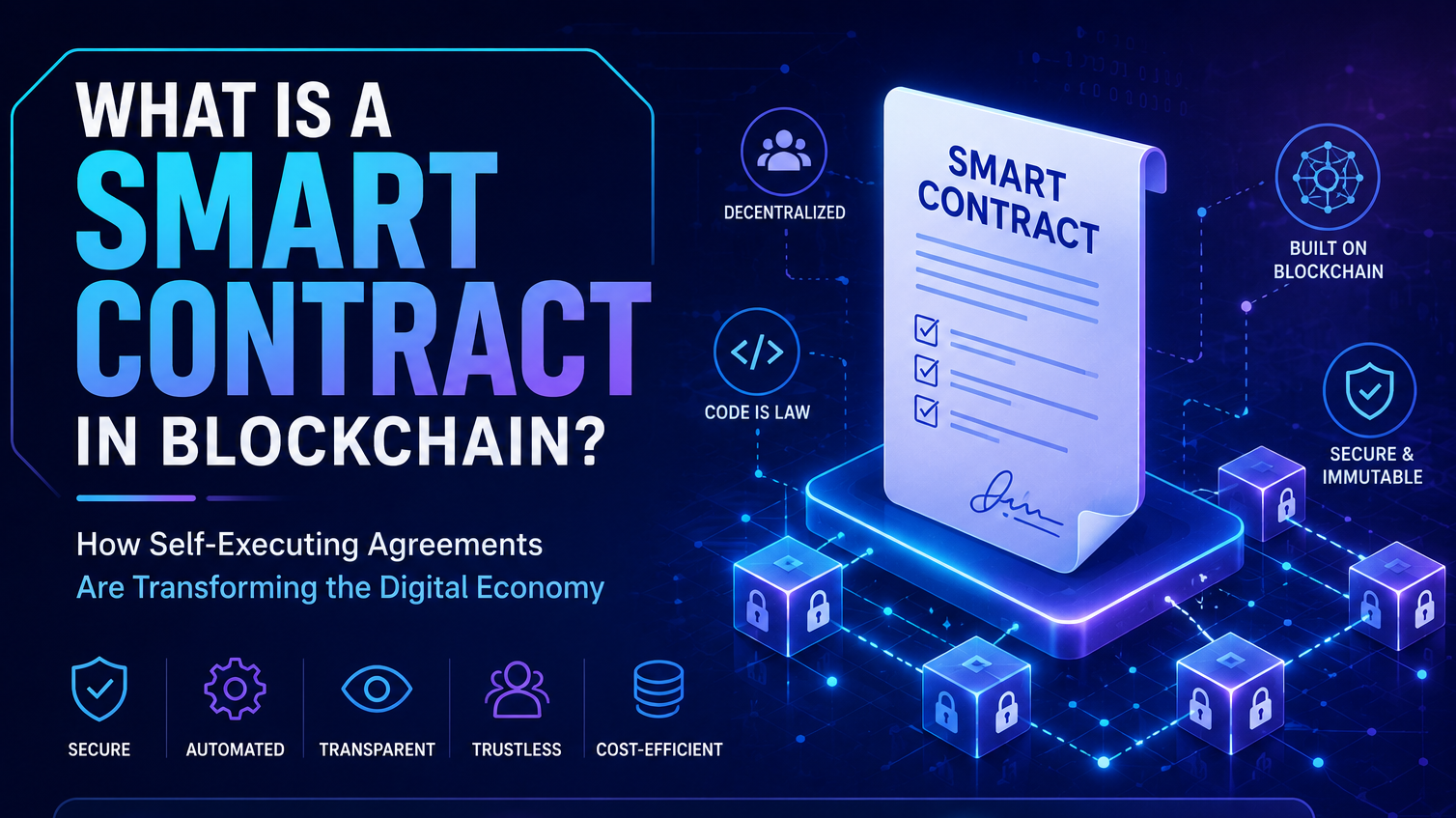
Smart contracts are self-enforcing digital agreements which are recorded in blockchain technology. They execute themselves whenever certain predefined conditions recorded in their codes are met.
How Smart Contracts Work
Smart contracts work through “if/when…then” logic embedded into the blockchain network. In this case, if the payment is made, then the ownership of the digital asset can be automatically transferred to another user. The moment the pre-set conditions are met, the contract self-executes, without any need for manual confirmation.
Smart contracts are deployed on decentralized blockchain networks and, thus, are not under the control of any centralized authority. All transactions and contract executions are logged on the blockchain network forever, making it impossible to commit any fraudulent activity.
The technology of smart contracts is mostly used within Ethereum, which enables programmability on the blockchain network. Ethereum provides the possibility to develop decentralized applications (dApps) utilizing smart contracts.
Key Features of Smart Contracts
Automation: With the agreement being automated, time will be saved, and paperwork will be reduced both for organizations and individuals. Automation helps avoid human errors and prevent delays caused by middlemen.
Security: Thanks to the cryptographic encryption that blockchain technology is built on, smart contracts are very hard to change after deployment. Decentralization of blockchain makes changing contracts even impossible.
Transparency: Smart contracts being recorded in the blockchain network, all interested parties can check contract conditions and transaction history. This promotes trust between the participants without the need of an intermediary.
Real-World Uses of Smart Contracts
However, apart from cryptocurrencies, smart contracts have been applied in different sectors as well. For instance, in the financial sector, smart contracts enable the automation of loaning, borrowing, and payment processes using DeFi platforms. Such platforms allow individuals to use financial services without involving banks.
In supply chain management, smart contracts make it easy to monitor goods from production to shipment. Companies can automate inventory management, shipping, and other operations in the supply chain.
In the real estate sector, the application of smart contracts allows property transactions to become more efficient. Property owners will be able to automate the transaction process once all conditions have been met.
Other sectors that have benefited from the use of smart contracts include the healthcare, insurance, gaming, and NFT markets. In NFTs, smart contracts can automatically verify ownership and pay royalties to the creators of digital artwork.
Benefits of Smart Contracts
Smart contracts have several benefits for organizations and individuals. They minimize costs through the elimination of intermediaries and automation of procedures. Transactions become faster and more efficient due to reduced approval processes and manual handling.
They also enhance reliability and accuracy. Because all the terms are programmed in the blockchain system, parties cannot tamper with the contract once it is deployed. This prevents conflicts in business transactions.
Moreover, smart contracts allow for global accessibility. Anyone with internet connectivity and a blockchain account can engage with smart contracts irrespective of their geographical locations.
The Role of AI in Smart Contracts
Artificial intelligence (AI) technology is helping improve smart contracts through automation, decision making, and increased security. AI can be used to analyze blockchain data, detect any fraudulent activities, and execute the contract optimally. The combination of AI and blockchain technology is anticipated to bring about smarter contracts in the future.
Challenges and the Future of Smart Contracts
Smart contracts are also prone to certain risks and problems. In particular, smart contracts may cause various security issues due to coding problems and flaws. Regulatory problems and scaling are among other challenges faced by smart contracts.
Nevertheless, there is no doubt that smart contracts have a very bright future ahead of them. Smart contracts will be constantly evolving due to the continuous development of blockchain technology. Developers and business owners will work on improving existing smart contract systems.