
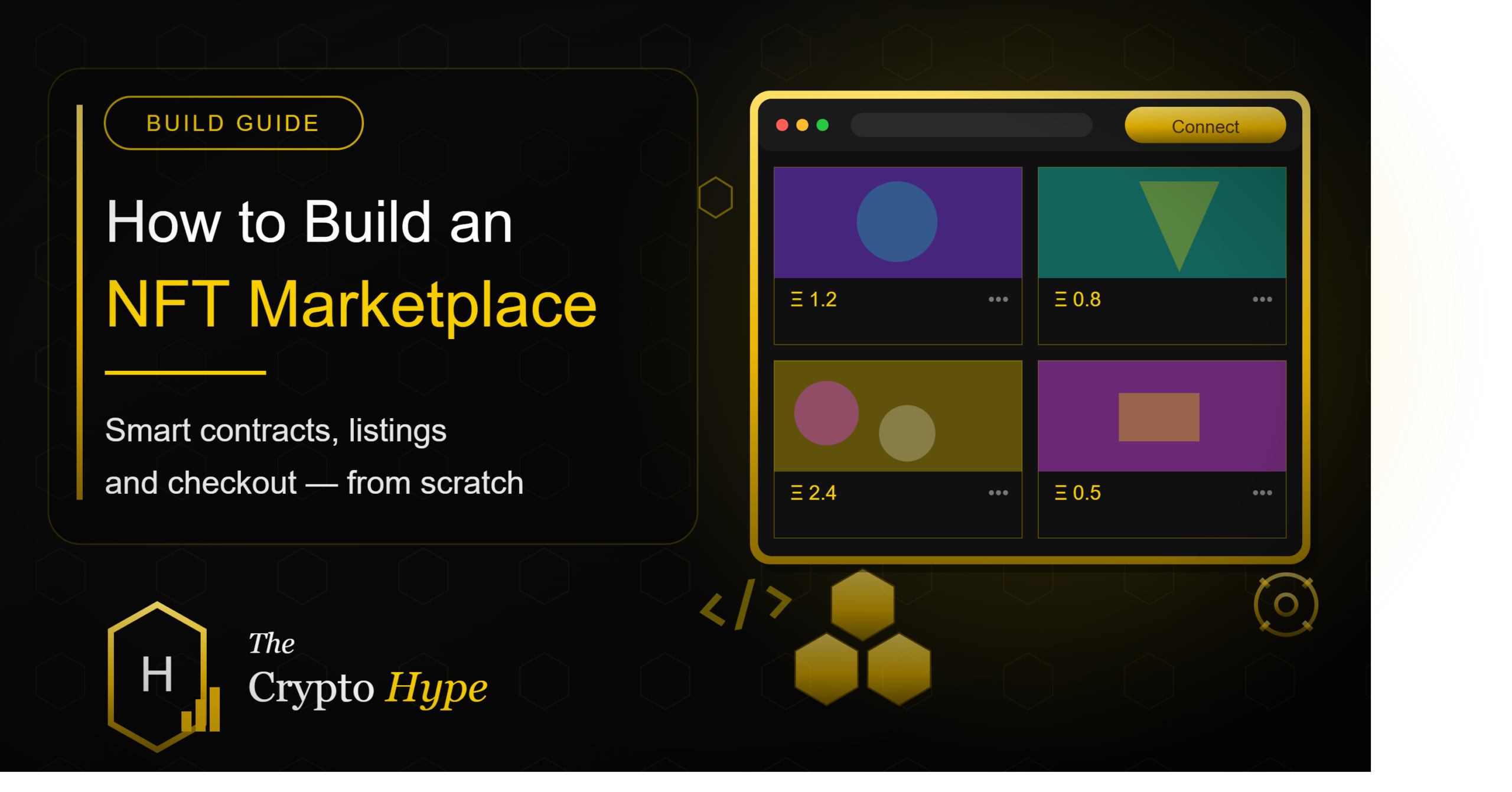
There are a number of changes that NFT markets have brought to the creation, ownership, purchasing, and trading of digital assets. This includes everything from digital art and collectibles to gaming assets and virtual assets. The NFT marketplace allows creators of content to earn money from their creations as well as provide users with an opportunity to explore and trade blockchain-based digital assets.
The process of developing an NFT marketplace from scratch is not simply about developing a web site. The process also includes blockchain integration, smart contracts, cryptocurrency wallets, NFT storage, payments, security, and much more.
3 Steps to Build an NFT Marketplace
Step 1: Choose the Blockchain and Define Features
First, choose the blockchain that you want to use for your marketplace. Pay attention to factors like transaction fee, scalability, speed, security, ecosystem, and development tools.
Second, determine the features of your marketplace. Possible features include NFT minting, fixed price, auction, bidding, creator profiles, collections, filters, wallet support, transaction history, notifications, royalties, and marketplace fee.
Finally, you need to choose what NFT standards you want to implement in your platform. ERC-721 is a standard for unique NFTs and ERC-1155 allows several kinds of tokens to coexist.
Step 2: Develop Smart Contracts and the Marketplace
Smart contracts form the backbone of a decentralized NFT marketplace. This includes minting, listing, buying, selling, transferring, auctioning, and distributing fees and other aspects.
In case of an EVM-compatible chain, Solidity is widely used for writing smart contracts. After that, the frontend of the market can be linked to these smart contracts with help of blockchain libraries and wallets.
Other than smart contracts, a developer must develop the frontend and backend of the NFT marketplace. The frontend needs to have features like pages for discovering NFTs, viewing collections, connecting wallets, making listings, and doing other activities.
The digital file and metadata of NFT can be stored via decentralized storage platforms, while the backend of the website can have functionalities like searching, notifications, and analyzing the blockchain.
Step 3: Test, Launch, and Scale
Test is very important before enabling users to do transactions with real assets. Test the smart contracts on the test network by performing actions such as minting, buying, sending, auctioning, bidding, withdrawing, and paying royalties.
Security audits of smart contracts could be helpful to find any potential threats before deploying the contract on the network. Once the tests are done, release the marketplace on the chosen mainnet.
Post deployment of the marketplace, you should monitor the performance, transaction errors, security incidents, and user interaction. When the platform will grow up, it can be optimized for more transactions and users.
How Does an NFT Marketplace Work?
NFT Marketplace allows the interaction between creators, buyers, sellers, wallets, and the blockchain network via one platform. Once the NFT is minted, the token is created in the blockchain system along with the metadata of the token.
Once the NFT is put up for sale, the smart contract from the marketplace is used to log the listing along with the terms of the transaction. The buyer links the crypto wallet to confirm the sale of the NFT. Then the smart contract transfers the NFT to the buyer and also processes the transaction as well as the charges applicable to the marketplace.
The transaction details are recorded in the blockchain. These details of blockchain are displayed by the marketplace interface.
Benefits of Building an NFT Marketplace
1. New Revenue Opportunities
Businesses can generate revenue through transaction fees, listing charges, minting fees, premium features, or other marketplace services.
2. Direct Creator Access
NFT marketplaces can allow creators to reach buyers directly without relying entirely on traditional intermediaries. Depending on the smart contract design and applicable marketplace mechanisms, creators may also receive royalties from eligible secondary sales.
3. Transparent Ownership
Blockchain technology creates a verifiable record of NFT ownership and transactions, helping users track the history of digital assets.
4. Global Accessibility
Blockchain-based marketplaces can potentially connect creators and buyers across different geographic locations, allowing digital assets to be traded through a global ecosystem.
5. Automated Transactions
Smart contracts automate important marketplace functions such as ownership transfers, payments, and fee distribution, reducing the need for manual processing.
6. Scalable Digital Ecosystem
A well-designed marketplace can expand beyond basic NFT sales by introducing auctions, creator tools, gaming assets, memberships, digital collectibles, and other blockchain-based products.
How to Use an NFT Marketplace
The process of using an NFT marketplace is rather easy and simple.
Connecting a Wallet: Users connect a suitable crypto wallet to the marketplace to manage their assets and authorize blockchain transactions.
Explore NFTs: Users can look through all NFTs and NFT collections offered via category, search, filtering, and sorting options.
Buy or Bid: In case the NFT has a set price, the user can buy it after getting familiar with transaction details and costs of the blockchain transaction. For the case of auctioned NFTs, the user can place his bids.
Mint and Sell NFTs: Creators can upload their assets, create metadata, mint NFTs, and offer them for sale. The precise procedure depends on the smart contract used by the NFT marketplace.
Manage the Collection: Users can view their collection of NFTs, transactions, listings, bids, and other marketplace actions from the profile page or from the connected wallet.
FAQs
How much does it cost to build an NFT marketplace?
It varies depending on the type of blockchain, complexity of smart contract, marketplace functionalities, design and UX/UI, wallet connections, storage infrastructure, security audits, and development costs. An NFT marketplace with basic functionalities will cost less than a platform with advanced auctions, analytics, several payment systems, and multi-chain capability.
Which blockchain is the best for NFT marketplace development?
There is no best one. Ethereum has a strong NFT marketplace, while others offer reduced fees, increased speed, or scalability opportunities. It all depends on your particular needs.
Is it necessary to use smart contracts for an NFT marketplace?
Yes, they are essential for decentralized NFT marketplaces since smart contracts can automate several processes such as minting, listings, purchasing, transferring ownership, auctions, and fee allocation.
How can an NFT marketplace support multiple cryptocurrencies/blockchains?
Yes, an NFT marketplace can be created for supporting multiple cryptocurrencies and blockchain networks. Still, it makes the development process more complex since the different blockchain networks can have different NFT standards, wallet connections, transactions, and other elements.