
Decentralized finance, or DeFi, has made financial services accessible through blockchain-based protocols and smart contracts. However, using DeFi applications can still require users to constantly monitor markets, compare opportunities, manage transactions, and adjust strategies.
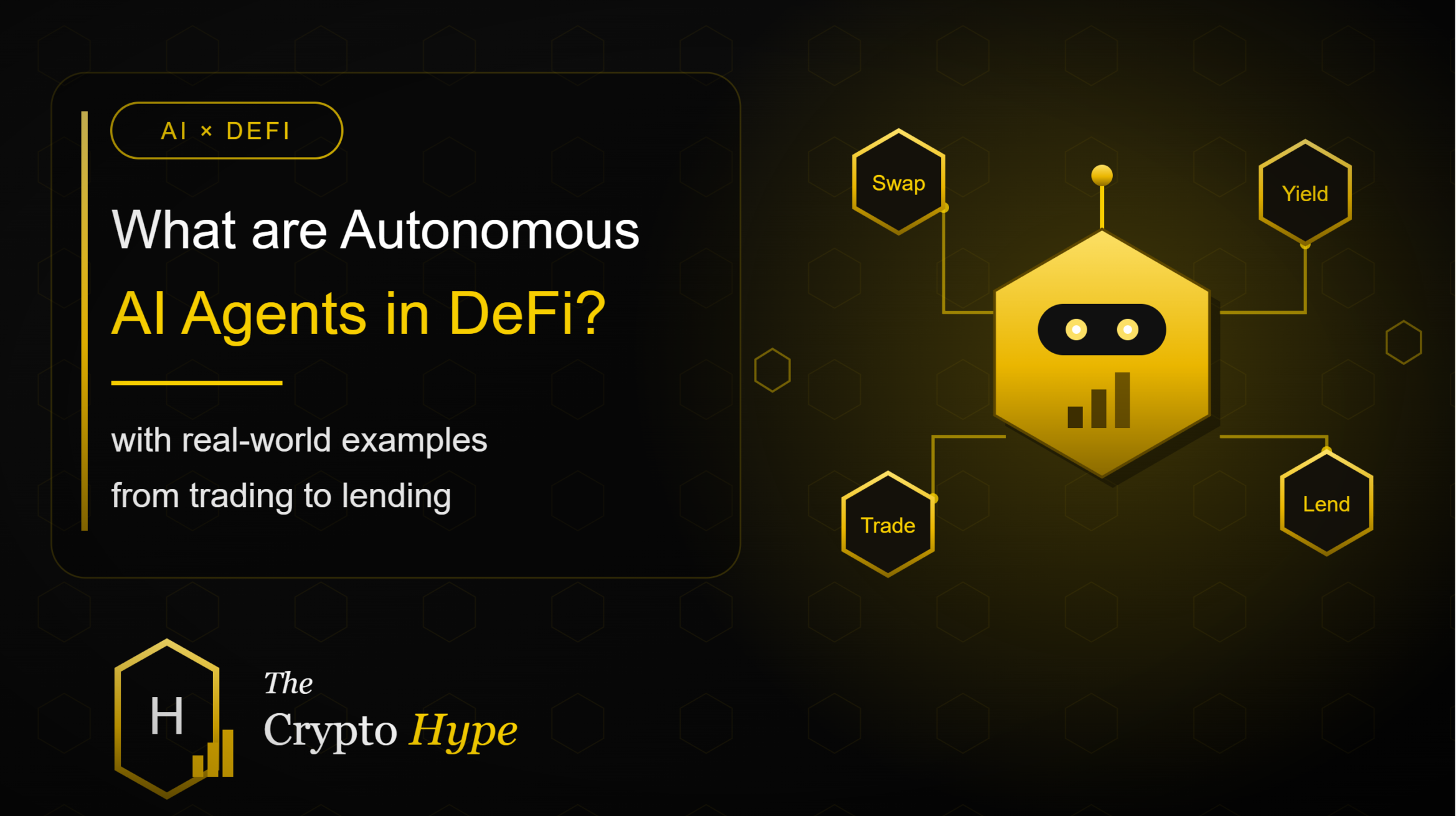
This is where autonomous AI agents in DeFi are emerging as a new area of development. These AI-powered systems can analyze blockchain and market data, make decisions based on predefined objectives, and execute certain actions through connected wallets or smart contracts.
Instead of simply providing information, an autonomous AI agent can potentially observe, decide, and act on behalf of a user. This creates possibilities for automated portfolio management, yield optimization, trading strategies, liquidity management, and other DeFi activities.
What Are Autonomous AI Agents in DeFi?
An autonomous agent based on AI technology includes software, which consists of artificial intelligence, blockchain information, wallets, APIs, and smart contracts used to make decisions without much human interference.
The agent might be given a task to handle a DeFi portfolio or to find a certain yield strategy. An agent could use this goal to gather all necessary information, evaluate available alternatives, decide upon certain actions, and make a decision that was deemed appropriate.
The degree of autonomy will depend on how the system was created. Some of the agents will just suggest possible actions, and some will carry out transactions automatically.
How do they work?
An autonomous DeFi AI agent generally follows several stages.
1. Data Collection
The agent gathers information from blockchain networks, DeFi protocols, market feeds, and other available data sources.
This can include token prices, liquidity levels, lending rates, borrowing costs, transaction fees, and historical activity.
2. Data Analysis
The AI system processes the collected information to identify relevant patterns or opportunities.
For example, it could compare lending rates across different protocols or monitor changes in liquidity.
3. Decision Making
Based on its objective and programmed constraints, the agent determines a potential course of action.
A yield-focused agent might evaluate whether moving funds between protocols could improve returns after accounting for transaction costs and associated risks.
4. Transaction Execution
If the agent has permission to act, it can interact with blockchain contracts through a connected wallet or execution system.
The transaction is then recorded on the blockchain like any other blockchain transaction.
Examples of AI Agents in DeFi
Yield Optimization Agents
A yield optimization agent can monitor different lending or liquidity opportunities and identify strategies that match predefined conditions.
For example, an agent could compare lending rates across several DeFi protocols and identify when another protocol offers a higher rate. Depending on its permissions, it could recommend or execute a rebalance.
Portfolio Management Agents
Portfolio agents can monitor the distribution of assets across a user’s wallet and follow predefined allocation rules.
If a portfolio moves significantly away from its target allocation, the agent could identify a rebalancing opportunity and prepare the necessary transactions.
Trading Agents
AI-powered trading agents can analyze market data and execute strategies based on predefined parameters.
They may monitor price movements, liquidity, volatility, or other indicators. However, autonomous execution introduces additional risks because incorrect decisions can result in financial losses.
Liquidity Management Agents
Liquidity providers often need to monitor their positions and market conditions. An AI agent could track liquidity pools and help determine when a position requires adjustment.
For concentrated liquidity strategies, an agent could monitor price ranges and identify when a position has moved outside the preferred range.
Benefits of Autonomous AI Agents in DeFi
- These agents may monitor and carry out operations repeatedly without having to require the user to be logged into the system and control each individual operation.
- In blockchain markets where trading takes place 24/7, automation may work quicker since the systems may react based on certain predefined conditions.
- AI agents may analyze huge quantities of information provided by various sources and use this information while making decisions on possible actions.
- Agents may be programmed with certain goals, risk thresholds, portfolio allocations, or transaction limitations.
What are the risks and challenges
However, AI-based agents also present major risks.
- The blockchain protocols used by the agents might have weaknesses.
- The AI model itself could misread data or come up with the wrong decision.
- Sudden market movements can make the strategy unworkable.
- The agent with transaction authority has to be secured from any form of hacking.
- Wrong, stale, or manipulated data can skew decision-making.
That is why the process of autonomous implementation needs security measures like transaction limitations, spending limitations, approved protocols, confirmation of critical actions, and emergency procedures.
The Future of AI Agents in DeFi
Combining AI and DeFi could make financial decentralized applications more automated and easier to access. Rather than engaging in interactions with various protocols, users may be able to state their financial intentions to software agents who would take care of the chosen operational tasks.
However, autonomy does not mean absolute freedom. Good systems would require clarity of rules, good data sources, robust security, and limitations.
An AI agent in DeFi is an autonomous system which combines artificial intelligence technologies and blockchains to collect information, assess the conditions, and execute the previously defined tasks in finance. Ranging from yield farming to portfolio and liquidity management, these agents could automate routine operations in DeFi.
On the other hand, the fact of independent execution brings new threats related to security, finances, and the technology itself.
What is an autonomous AI agent in DeFi?
An AI-driven software program that has the ability to interpret DeFi and blockchain data, take decisions based on the set objectives, and even perform blockchain transactions based on permissions.
Can AI agents trade crypto automatically?
Yes, an AI agent could be designed in such a way as to observe the market trends and make trades based on set strategies and permissions. There are associated market, execution, and security risks.
Are autonomous AI agents safe?
No, they are not without risks, which include AI-related mistakes, smart contract risks, compromised wallets, unreliable data, and market volatility.
What are some things AI agents can do in DeFi?
This could depend on how they are designed, and may include monitoring yields, portfolio management, rebalancing, market analysis, liquidity management, and execution of selected blockchain transactions.