
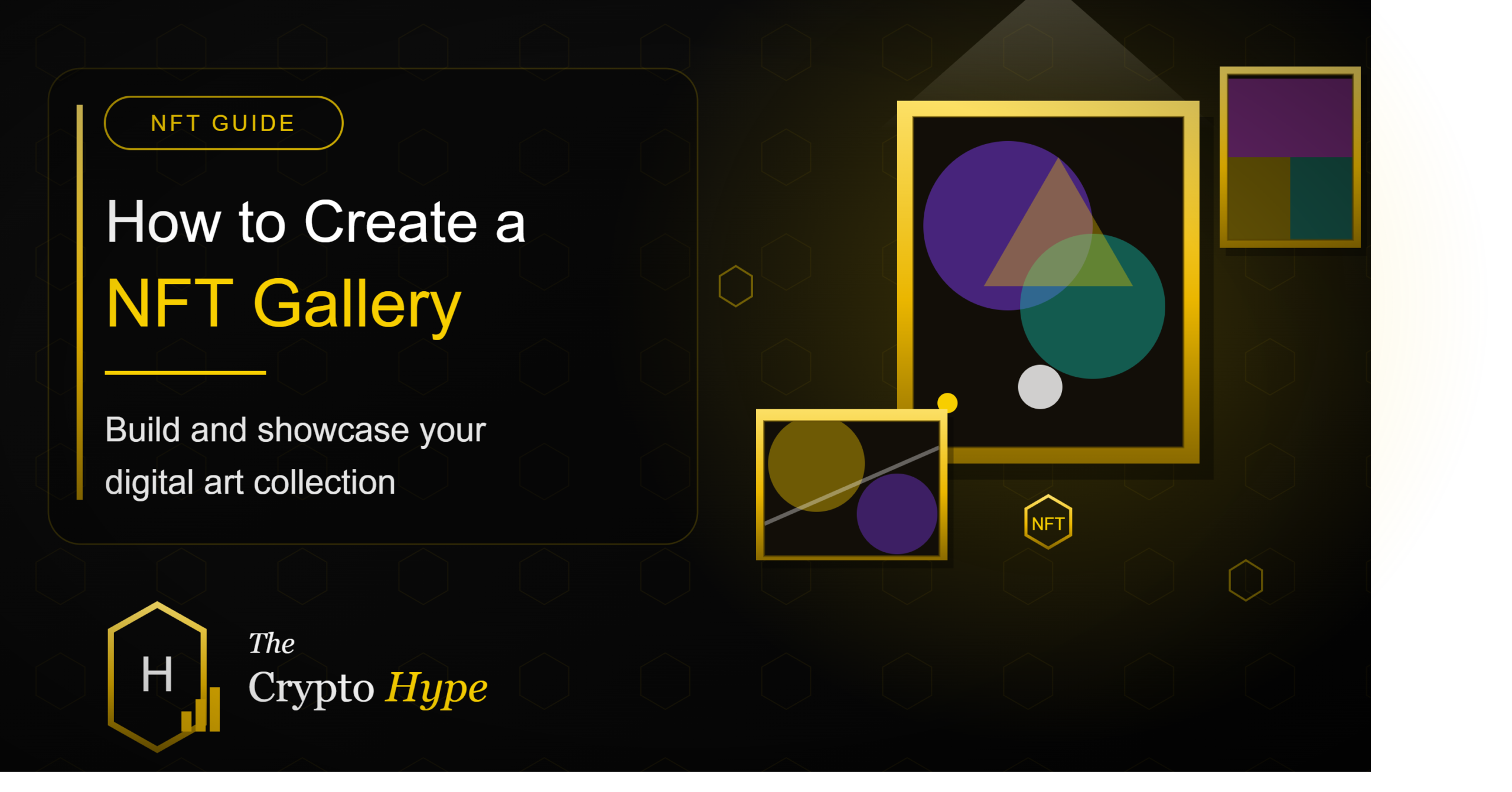
NFT gallery is a web portal wherein people can explore, see, purchase and sometimes even exchange non-fungible tokens. Since NFTs can be anything from digital arts to collectible things and music to virtual assets and beyond, an NFT gallery offers a curated platform for the display of such assets.
Creating an NFT gallery is not just about designing an appealing website; you have to take into account the blockchain integration, wallet connectivity, NFT metadata, user experience, and much more. Below are the steps on how to create an NFT gallery.
Define Purpose
You begin by determining the offering of the NFT gallery. Some galleries display digital art only, but others allow users to link wallets, mint NFTs, buy assets, or resell collectibles.
The purpose serves to inform about what technical features should be provided. For instance, if you are building a gallery of curated art, then it needs better visual representation, whereas the NFT marketplace has many more features.
Choose Blockchain
Choose the blockchain that will facilitate your NFT gallery. One option is to use Ethereum since it has a well-established NFT ecosystem and many wallets and marketplaces. You can also consider other options like Polygon, Solana, and BNB Chain that have various benefits.
Choosing a blockchain determines the development tools, smart contracts, wallet support, transaction fees, and type of NFTs you can create on your platform.
Plan Features
Develop a feature checklist to get started with development. Some basic features for an NFT gallery could be NFT collections, artist profiles, search, filters, individual NFT pages, and wallet integration.
Some additional features could be minting, purchasing, selling, bidding, auctions, favorites, user profiles, transaction history, notifications, and creator royalties.
Choose the features that align with the objective of your NFT gallery.
Design Interface
NFTs are extremely visual in nature; therefore, the design of the user interface must put emphasis on the artwork. Design the user interface with good navigation and responsiveness on both desktop and mobile platforms.
Grid based layout could be used for presenting the collections on separate pages with the individual assets being shown separately and along with other details like creator, collection, token ID, blockchain, ownership and attributes of the NFT.
The interface must also be such that the blockchain related information is clear even for a layman.
Build Backend
The backend takes care of the information that makes the gallery functional. In different projects, this can be users’ profile, collection information, indexing NFTs, search information, favorites, transactions, and notification.
Blockchain networks can be communicated by the backend using appropriate API and indexing services. This enables the system to get NFT information without having to make direct queries to the blockchain for each user action.
Connect Wallets
Wallet integration enables interaction with NFTs and blockchain operations. The selected blockchain will determine which compatible wallets are used.
This allows users to link their wallets for viewing owned NFTs, buying assets, minting a collection, or transferring assets.
This process should be easy to understand. Users should be clearly informed about what they are signing before asking for wallet confirmation. Never request users to give private keys or recovery phrases.
Integrate NFT Data
NFT galleries require consistent NFT data. Every NFT may have certain data, such as its token ID, owner, collection, creator, metadata, and media file.
The metadata could be stored via decentralized storage solutions or any other necessary infrastructure. The gallery will use this data and show it to the user.
It is important to keep in mind that there might be no metadata, broken media links, and outdated blockchain information for the users.
Add Search
With the rise of more and more NFTs, discovery becomes more and more relevant. Include features that let users discover assets fast.
Some filters that may prove useful are collection, creator, price, blockchain, category, rarity, attributes, and ownership.
Sorting by newest, oldest, highest price, lowest price, and popularity will make the experience even better.
Implement Marketplace
If your gallery will also function as a marketplace, additional blockchain functionality is required. Users may need to list NFTs, purchase assets, place bids, accept offers, or participate in auctions.
These transactions should be handled through secure smart contracts. The interface should clearly display prices, network fees, royalties where applicable, and transaction status before users confirm an action.
Prioritize Security
Consider security throughout the development process. NFT sites work with wallets and blockchain operations; thus, security is very important.
Use proven smart contract guidelines and libraries. Make sure you validate the user’s input, protect administrative functionalities, secure the APIs, and do not save any personal information from the user’s wallet.
Make sure that the smart contract is well tested and, in case of large-scale project implementation, it is audited as well.
Test Platform
Before launching, test the gallery across different devices, browsers, wallets, and blockchain environments.
Check wallet connections, NFT loading, metadata retrieval, search functionality, transaction flows, error messages, and responsive layouts.
Testing should also cover unsuccessful transactions and network interruptions. Users should receive clear feedback instead of being left uncertain about whether an action succeeded.
Launch Gallery
Deployment and connection to the blockchain architecture should be done after successful development and testing.
Consider conducting a controlled deployment if feasible. Transactions, performance, user feedback, and errors can all be monitored. Analytics can give insights into what kinds of collections and functionality are being used the most.
Updates can always help to enhance performance, security, visibility, and the user experience.
The development of an NFT gallery involves visual design, blockchain, smart contracts, wallets, data handling, and security. A normal development process will begin with setting the objective for the gallery and selecting the blockchain before getting into design, backend development, data from NFTs, wallets, testing, and launching.
An efficient NFT gallery will ensure that the blockchain assets are easily accessible to users without being bogged down by complex blockchain technicalities. An NFT gallery whether focusing on digital arts, collectibles, gaming items, or any other kind of NFTs will have a good foundation with a proper user experience and blockchain technology.
FAQs
What is an NFT gallery?
An NFT gallery is a digital platform that displays NFTs and allows users to explore information about digital assets, creators, collections, and ownership.
Do I need blockchain knowledge to create an NFT gallery?
Basic blockchain understanding is helpful, especially for wallet integration, NFT standards, smart contracts, and transaction management. Developers can also use established APIs and development frameworks.
Can an NFT gallery include buying and selling?
Yes. An NFT gallery can be expanded into a marketplace where users can buy, sell, bid on, and transfer NFTs through blockchain-based transactions.
How much does it cost to create an NFT gallery?
The cost depends on the platform’s complexity, design requirements, blockchain network, integrations, security testing, and marketplace functionality. A simple gallery generally costs less than a full NFT marketplace.