
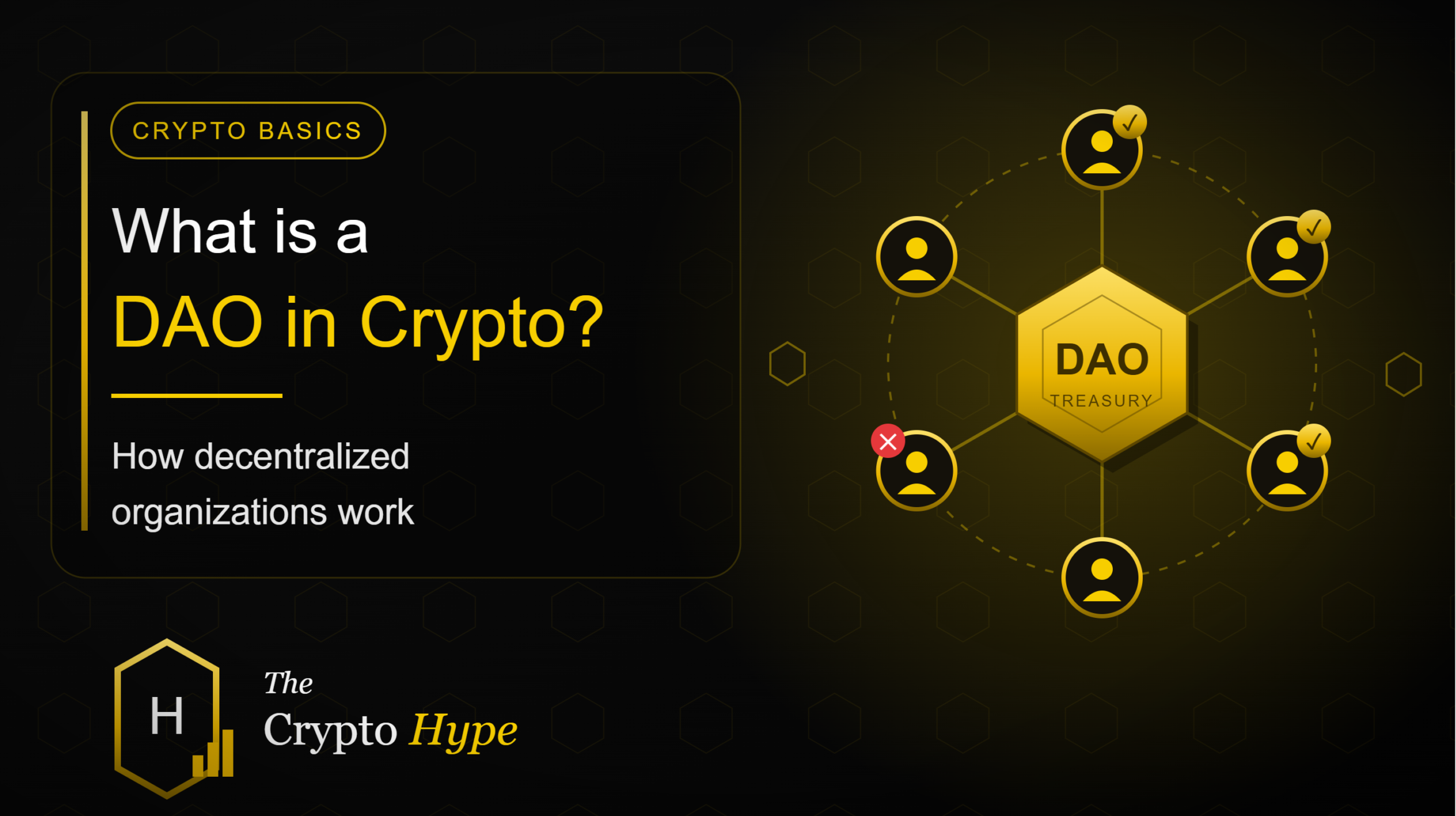
A Decentralized Autonomous Organization, which goes by the acronym DAO, is a blockchain company that enables people to collaborate, make decisions, and control common funds without having a central authority in charge of such processes. In contrast to a conventional company where a CEO or a board takes all major decisions, the participants of a DAO generally utilize smart contracts and other governance tools in order to make decisions.
DAOs are actively used in decentralized finance (Defi), NFT communities, blockchain platforms, games, and web3 ecosystems.
Understanding the basic idea behind a DAO
- In a typical organization, there is always an organizational hierarchy. In an organization, there are executives, managers, employees, and shareholders. Decisions in a normal organization move from one level of organization to another level.
- But a DAO does not follow the above traditional form of organization structure. In this case, the rules of operation are defined using smart contracts whereas members of the community engage in governance using the particular DAO’s structure.
How does a DAO work?
A DAO generally combines several blockchain components to coordinate its activities.
1. Smart Contracts
Smart contracts establish the rules and functions of the DAO. These are blockchain programs that automatically execute predefined actions when their conditions are satisfied.
For example, a DAO’s smart contracts could determine how treasury funds are controlled or how a governance proposal moves through the voting process.
Because the contracts operate on a blockchain, their activity can often be publicly inspected.
2. Governance Mechanisms
Governance is at the heart of most DAOs. Members can submit or vote on proposals concerning the organization’s operations.
Depending on the DAO, voting power may be based on governance tokens, delegated voting rights, reputation, or another mechanism.
A proposal might involve funding a development project, changing protocol parameters, or allocating treasury assets.
3. Treasury Management
Most DAOs manage digital assets by means of community treasuries. The funds might be sourced from token sales, protocols, grants, and more.
Whereas one individual gets full authority to make decisions, these decisions within a treasury might have to be backed up by governance or require many approvals.
It enables community members to decide together on what is to be done with shared resources.
4. Blockchain-Based Records
DAO activities can be recorded on a blockchain. Transactions, proposals, and voting activity may therefore be publicly verifiable, depending on the blockchain and governance system being used.
This transparency is one of the major differences between blockchain-based organizations and conventional organizations.
What is a DAO Token?
Governance tokens are often released by many DAOs, giving their token holders some kind of participation rights.
Not all crypto tokens will be necessarily indicative of any ownership rights or governance rights or asset claims to an organization.
It is solely dependent on the design of the project and the legal framework of the project as to what rights are granted through the tokens.
In many cases, DAOs have separated the concept of governance participation from the economic incentives of their participants.
Why are DAOs important in Web3?
DAOs aim to address a basic coordination issue: how can individuals, who do not necessarily know or trust each other, organize their management and decision-making about resources?
Blockchain is a common technological basis for maintaining transaction records and following certain principles. DAOs develop governance frameworks that rely on this common technological basis.
DAOs may also facilitate worldwide involvement. The participant in one country may be involved in governance of the protocol together with participants from many other regions, depending on the DAO’s rules of admission.
The future of Decentralized Organizations
DAOs will continue to develop, as developers come up with innovative models for governance, voting, treasuries, and contributor incentives.
The future DAO models could involve combining on-chain governance with off-chain organizations, legal entities, reputation systems, and decision-making software.
Instead of completely displacing traditional organizations, DAOs may become another way of organizing communities and resource distribution.
FAQ
What does DAO stand for in crypto?
DAO stands for Decentralized Autonomous Organization. It is a blockchain-based organizational structure that uses smart contracts and governance mechanisms to coordinate decisions and resources.
How do DAO members make decisions?
DAO members typically participate through governance proposals and voting. The exact voting system depends on the DAO and may involve governance tokens, delegated voting, reputation, or other mechanisms.
Are DAOs completely decentralized?
Not necessarily. The degree of decentralization varies between DAOs. Developers, large token holders, delegates, multisignature signers, or other groups may have significant influence.
Can a DAO control cryptocurrency?
Yes. Many DAOs manage community treasuries containing cryptocurrencies or other digital assets. Governance rules determine how those assets can be allocated or transferred.