
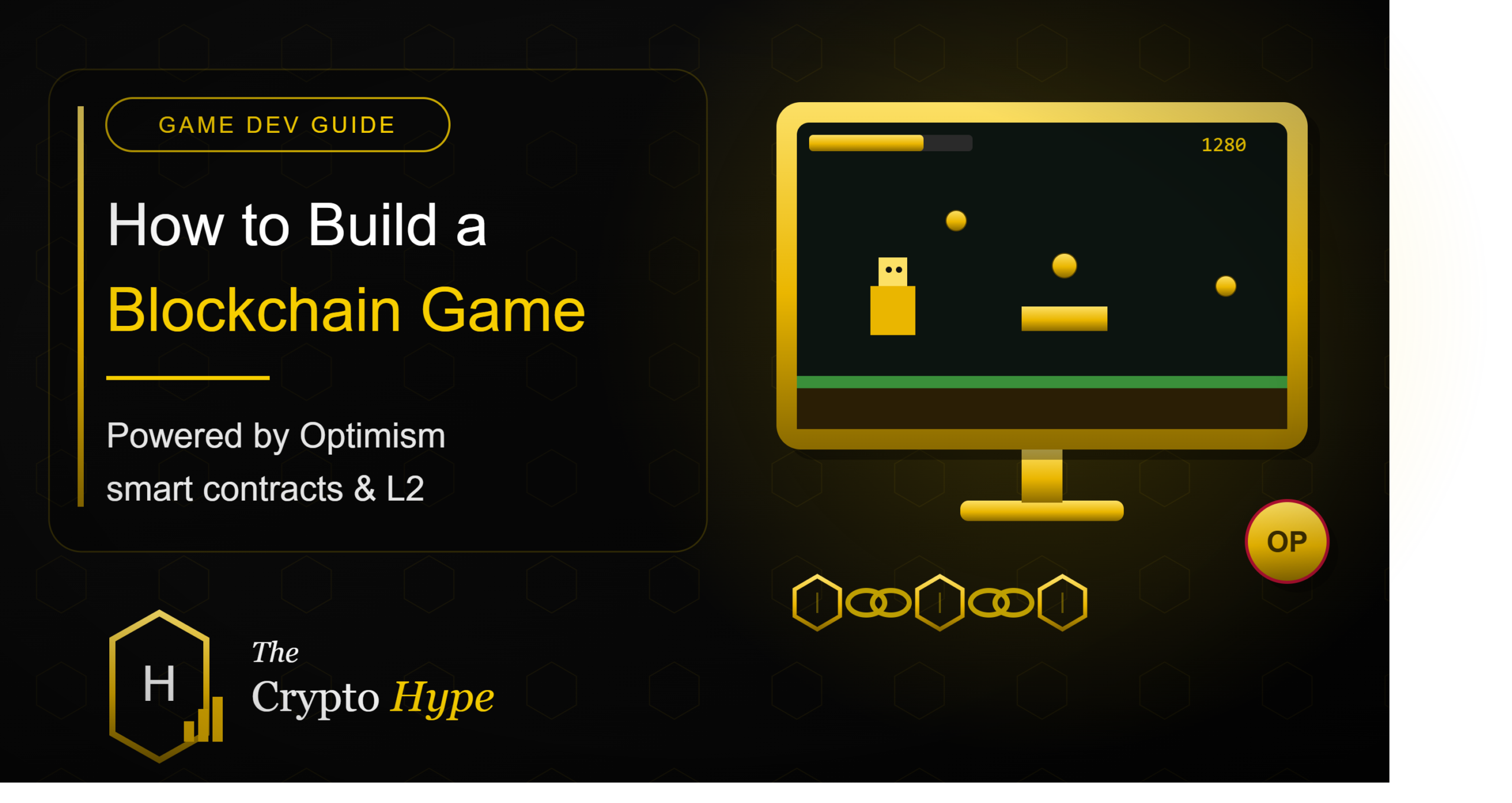
Blockchain gaming utilizes traditional gaming features together with blockchain technology which enables players to have ownership, trading, and interaction with digital assets. Optimism, which is an Ethereum Layer 2 protocol, can be leveraged in the development of a blockchain game that will leverage the compatibility with Ethereum yet offer improved transaction speeds and cost efficiency.
The development of a blockchain game using Optimism entails more than linking a game with a blockchain since developers have to ensure that the game play has been defined, appropriate blockchain features selected, smart contracts coded, and a wallet integrated into the process.
This is a step-by-step process of developing a blockchain game using Optimism.
3 steps to build a blockchain game with optimism
Step 1: Design the game and blockchain architecture
First, establish what the core concept of the game, its gameplay loop, target market, and blockchain-related features are. Determine which aspects of the game should go on the blockchain.
Characters, weapons, skins, collectibles, or any piece of land that can be traded and owned can be turned into NFTs. On the other hand, fast-paced gameplay and animations, among other aspects of the game, do not necessarily need to be put on the blockchain.
Then comes the architecture. A hybrid approach is when the gameplay and interactions take place in a regular game server while Optimism handles the blockchain functionality like asset ownership and transactions.
Step 2: Build smart contracts and integrate optimism
Optimism goes well with the Ethereum development environment; therefore, it allows using the same development tools as well as smart contracts written in such programming languages as Solidity.
Create smart contracts needed for the blockchain functionality that your game needs. They may involve such functions as NFT minting, asset ownership, transactions in the marketplace, reward tokens, and player achievements.
Apply existing token standards when you need them. You may apply ERC-721 standard for unique game assets and ERC-1155 standard when there are several kinds of assets in your game.
Once you develop the smart contracts, deploy them into the Optimism blockchain network.
Step 3: Connect the game, wallet, and blockchain
The last part is to integrate the blockchain layer into the game itself.
Player wallets allow them to manage their blockchain assets. The game interface should explain all the wallet transactions in simple terms, indicating clearly when the player approves something and when a transaction is initiated.
NFT ownership details and other information on the blockchain can be fetched by the game from RPC services or indexing providers. Blockchain events will help update the game data accordingly.
Test out the entire process on the Optimism testnet prior to launch. After testing everything – smart contracts, wallet operations, the gameplay, and transactions – release the game to the Optimism mainnet.
How does a blockchain game on optimism work?
The blockchain gaming platform on the Optimism network combines traditional elements of the game structure with the blockchain-based ownership mechanism.
To elaborate, the user can create an account and start playing the game from the off-chain game server. After the user acquires or buys some unique asset, the blockchain technology can register the asset by means of the smart contract in the Optimism blockchain.
If the asset is sold by the player, the blockchain records the transfer of the ownership, and the game can access the updated data in the blockchain and update the player’s inventory correspondingly.
The combination is rather convenient, since there is no need to confirm each move made during the real-time game on the blockchain.
Benefits of building a game with optimism
- Optimism was built as a Layer 2 protocol for the Ethereum network, meaning that developers can leverage their experience with Ethereum tools and development techniques to create their game.
- The use of Layer 2 solutions may help to decrease transaction costs for various blockchain operations in comparison with performing the same operations on the Ethereum mainnet. It could be valuable for games that require frequent asset transactions.
- Using a hybrid approach makes it possible for developers to perform gameplay-related functions off-chain while doing transactional actions related to blockchain through the Optimism protocol.
- Records of blockchain will show all the transactions of supported assets.
How to use a blockchain game built on optimism
- Players typically begin by creating or connecting a compatible crypto wallet. The game may then ask the player to connect the wallet to the application.
- Once connected, players can access eligible blockchain-based assets and begin playing. Depending on the game, users may purchase characters, collect NFTs, earn rewards, or trade digital assets.
- When an on-chain action is required, such as purchasing an NFT or transferring an asset, the player confirms the transaction through their wallet. Once the transaction is processed, the game can update the player’s inventory or account based on the blockchain data.
- For a smoother experience, developers can minimize unnecessary blockchain transactions and clearly explain any network fees before players confirm an action.
Key considerations before you launch your game
- It is important to consider security when creating a blockchain game. It is important to carry out extensive tests for smart contracts and, if necessary, conduct security audits.
- Also, developers need to take care of how the economics of tokens will work. The introduction of tokens into the game without proper economic mechanisms may lead to volatility.
- And, finally, blockchain needs to be used for gameplay and not against it. Players should understand the purpose of blockchain elements and use them without much technical knowledge.
FAQs
Why use Optimism for blockchain gaming?
Optimism provides an Ethereum-compatible Layer 2 environment that can make blockchain interactions more practical for applications requiring frequent transactions. Its compatibility also allows developers to work with familiar Ethereum development tools.
Does every game action need to be recorded on Optimism?
No. In most blockchain games, it is more practical to keep fast, repetitive gameplay actions off-chain and use Optimism for important activities such as asset ownership, trading, rewards, or other verifiable game events.
What programming language is used to build blockchain games on Optimism?
Smart contracts for Optimism can be developed using Solidity. The game itself can be built using conventional game-development technologies such as Unity or Unreal Engine, with blockchain functionality integrated through appropriate APIs, libraries, and wallet infrastructure.
Can players own the assets they earn in an Optimism game?
Yes, if the game represents those assets as blockchain-based tokens or NFTs. Ownership is recorded through the relevant smart contract, allowing supported assets to potentially be transferred or traded according to the game’s rules.