

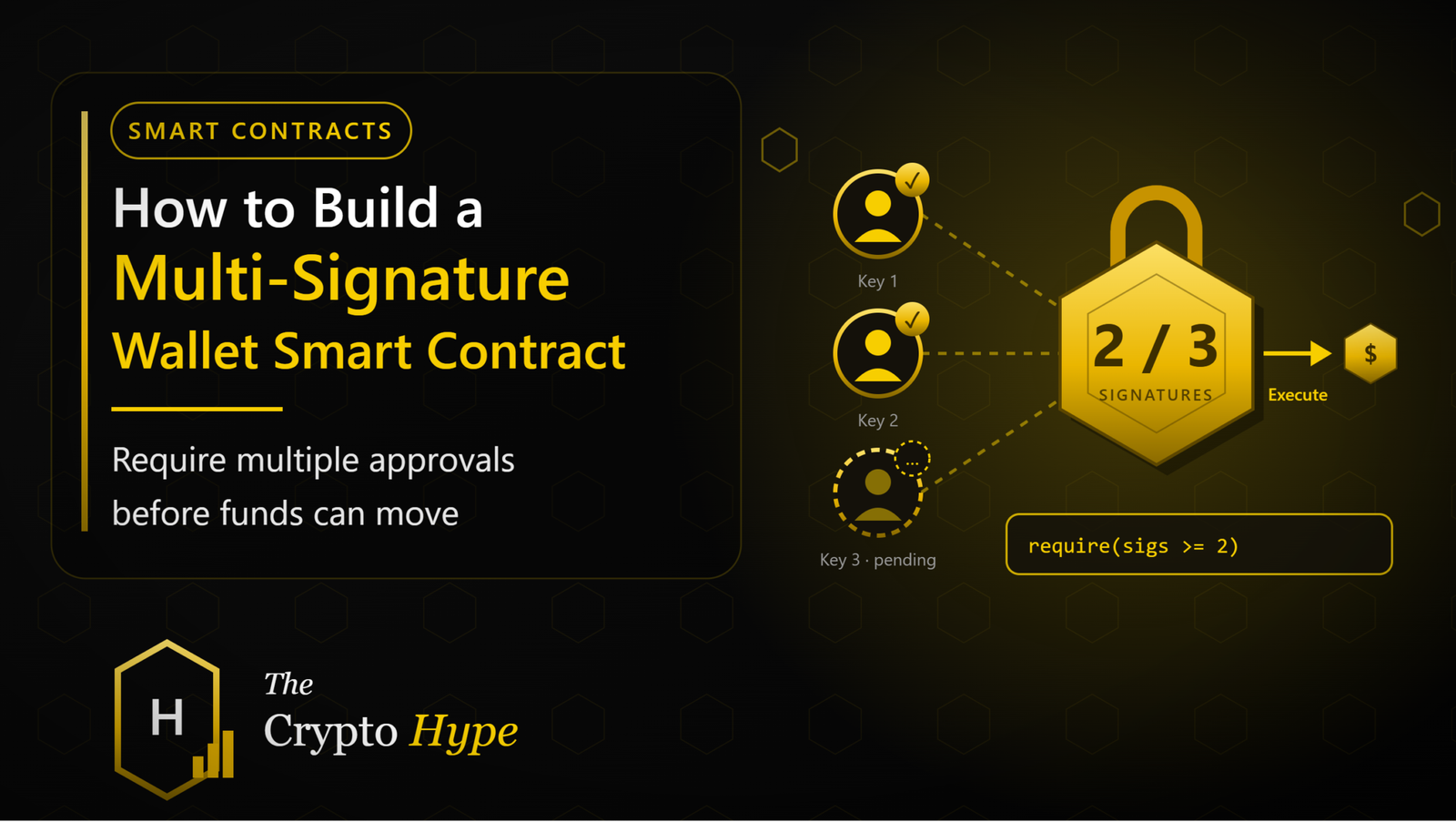
A multi-signature wallet is a blockchain wallet that needs confirmation from several authorized signers to process any transaction. This is different from a regular wallet because it does not involve just one private key but is based on more than one participant.
For instance, in a 2-of-3 multi-signature wallet, there are three signers, and at least two of them have to confirm any transaction.
Multi-signature wallets can be used for the treasuries of DAOs, crypto projects, business funds, and smart contract management. They minimize the need for a single key and make sure that any unauthorized transaction is prevented. Yet, its security always depends on the contract implementation and private key security.
How Does a multi-signatureWallet Work?
The multi-signature wallet approval process is as follows:
- Propose a Transaction: The transaction is proposed by an authorized signer; for example, sending ETH to another address.
- Gathering Approvals: All other authorized signers verify and approve the transaction.
- Check Threshold: The contract determines if there have been enough approvals.
- Execute the Transaction: When the threshold is satisfied, the contract executes the transaction.
- Execution Status: The transaction is marked as completed to avoid executing it twice.
The threshold of approvals is determined when the wallet is set up. For example, a 3-of-5 wallet needs three approvals from five authorized signers.
Tools Required to Build a multi-signatureWallet
- Before writing your contract, prepare the development environment.
- Programming language: Solidity is the language for writing the smart contracts for Ethereum.
- Development environment: Remix IDE is an online development environment for Solidity programming.
- Test network for Ethereum: This will allow you to play around with transactions without any risks.
- Wallet extension: An appropriate wallet extension that will help you connect your accounts to the deployed contract.
- Automated tests: Hardhat or Foundry can help you perform automated tests and uncover potential errors.
Step-by-Step Guide to Building a multi-signatureWallet
Step 1: Define the Requirements for the Wallet
First, you need to specify how the wallet is supposed to work.
Define the list of authorized signers, the required number of approvals, and the assets which the wallet is going to manage. For instance, the simplest wallet will manage only ETH, and the more advanced one will manage ERC-20 tokens and interaction with smart contracts.
Take, for example, three authorized signers with two required approvals.
Step 2: Design the Solidity Contract
Next, create a new Solidity file in Remix. The main components of the contract include:
- Array or mapping to keep track of the authorized signers.
- Threshold variable for defining the required number of approvals.
- Transaction structure with recipient, amount, execution, and approval fields.
- Functions for submitting, approving, and executing transactions.
- These are the basic components of the wallet. It is best to start with a minimal contract to be able to test all the functions separately.
Step 3: Include Transaction Proposal
Design a method by which the authorized signer can send a transaction proposal.
The method should check the validity of the recipient and details of the transaction, save the proposal in the system, and give it a unique identifier. In the case where the wallet accepts ETH transactions, it should include the contract’s balance at any one time.
The transaction remains pending until it attains the necessary approvals. Submission should never automatically trigger the execution of a transaction.
Step 4: Include Approval Logic
Include a method of logging the approvals by signers.
This method should confirm the identity of the signer, the existence of the transaction and its validity. The method should also not allow the same signer to approve the same transaction twice.
Once an approval is successfully logged, the number of approvals increases. The execution of the transaction becomes possible when it reaches the necessary number of approvals.
Step 5: Add Transaction Execution
Write the function that will test whether the condition for execution approval has been fulfilled.
Before any external call, the contract must be sure about the validity of the transaction and whether it has not been executed yet. By marking it as executed before any external call, you decrease the chances of having problems with reentrancy attacks.
Step 6: Do the Compilation, Testing, and Deployment
Compile the contract in Remix and fix all errors and warnings from the compiler. Test the contract in a local environment or on a testnet using different accounts.
Testing should consider the following situations:
- Transactions are approved by enough people and executed successfully.
- An unauthorized account tries to approve the transaction.
- The signer tries to approve the transaction two times.
- Execution is called without reaching the threshold.
- Execution is called multiple times.
- The transaction fails due to lack of funds or external call error.
- After testing is finished, you can think about deploying the contract.
What you should remember
Creating a multi-signature wallet smart contract consists of setting authorized signers, specifying the number of approvals required, storing transactions’ proposals, verifying approvals, and performing the transaction. Solidity programming language, along with other tools, like Remix, allows creating a basic version of this program.
But to use this smart contract for handling assets, there is more to be done than just writing the code.
FAQs
What is a multisignature wallet smart contract?
It is a software application running on a blockchain which executes transactions only after the consent of a certain number of authorized signers.
Can I create a multi-signature wallet in Solidity?
Yes. Solidity can create multisignature wallet applications with signer authorizations, transaction proposals, record approvals, and threshold-based transaction executions.
What is a 2-of-3 multi-signature wallet?
It is a multisignature wallet with three signers such that at least two are required to approve the transaction.
Is a multi-signature wallet created by me secure?
Not necessarily. It depends on how the smart contract was coded and tested. It is recommended not to use an untested multi-signature wallet for securing large funds.