
Crowdfunding has been adopted as a means for startups, creative individuals, and projects to raise money from their audiences. Centralized crowdfunding sites normally depend on a centralized firm that deals with fund management, transactions, and payments. This type of system is easy, but it may have some limitations and fees that could be charged by the platforms.
Decentralized crowdfunding DApps offer an option to use blockchain and smart contracts for managing the fundraising process. It allows people to conduct campaigns through the blockchain technology without necessarily depending on a centralized organization.
What is a Decentralized Crowdfunding DApp?
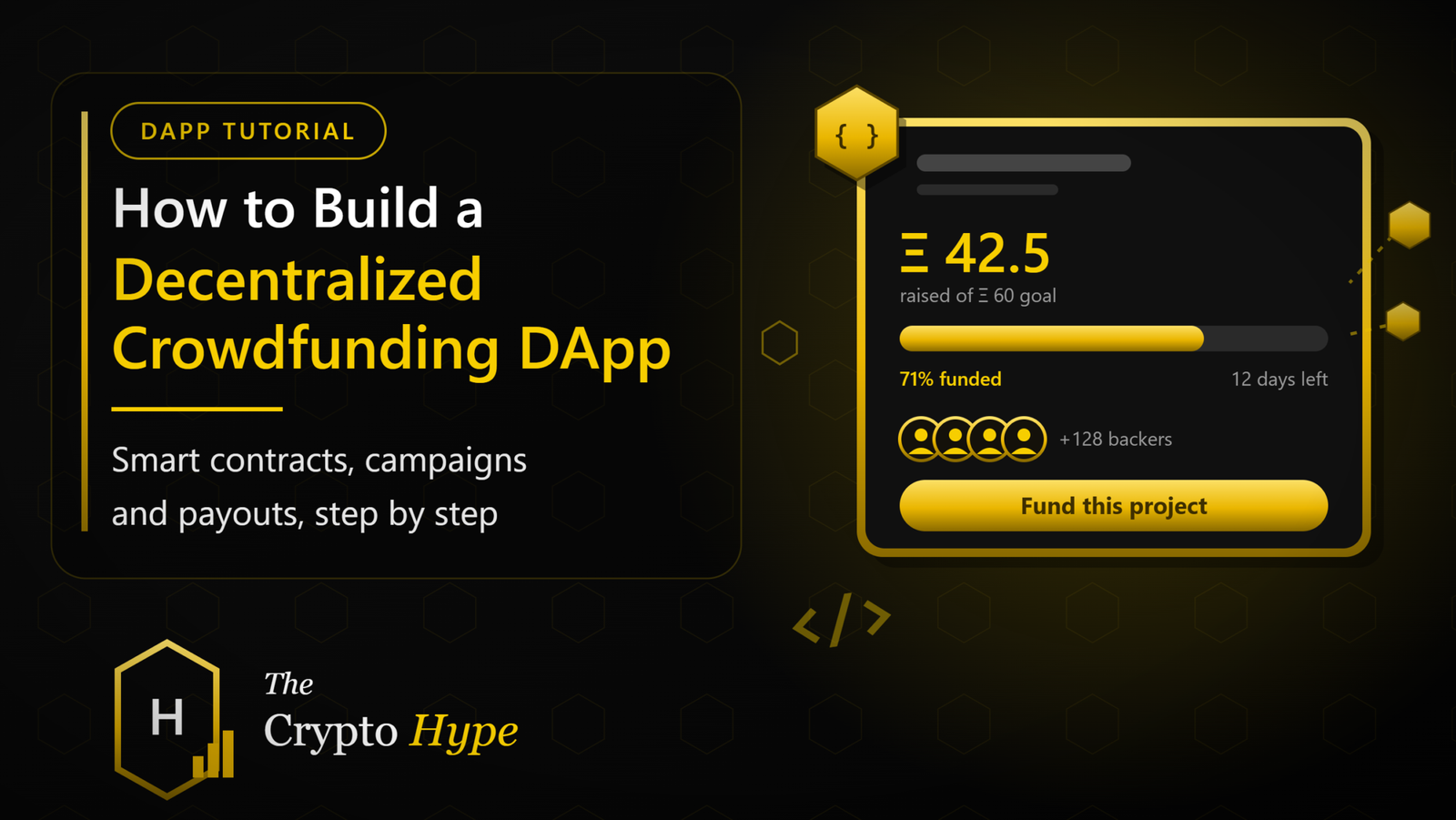
Decentralized crowdfunding DApp is an application where people can raise money from a blockchain platform.
DApp is a shortened form of decentralized application, which is normally comprised of an interface and smart contracts which are used to implement certain rules.
For instance, one can conduct a campaign where they will be raising money for an open source application. The campaign supporters will be able to link their wallets and make contributions to the campaign.
It can have targets, time limits, contribution limits, and conditions under which money will be withdrawn by users. After deployment of these rules through a smart contract, they become enforced by the contract, based on how it has been set up.
However, decentralization does not necessarily mean that all campaigns will be legitimate or that the money will get back to the contributors.
Steps to build a Decentralized Crowdfunding DApp
- Define the campaign rules. Decide how users can create campaigns, set funding goals, choose deadlines, and specify whether contributions will be refundable. Establish clear rules for successful and unsuccessful campaigns.
- Choose a blockchain network. Select Ethereum or a compatible Layer 2 based on transaction fees, security, ecosystem support, and expected user activity. Testnet deployment is useful before committing to a production network.
- Develop the smart contract. Write Solidity functions to create campaigns, accept contributions, track balances, and handle withdrawals or refunds. Include checks that prevent unauthorized access, invalid contributions, and repeated withdrawals.
- Test the contract thoroughly. Use Hardhat or Foundry to test normal transactions and edge cases. Verify what happens when deadlines expire, targets are missed, or users attempt unauthorized withdrawals.
- Build the frontend. Create pages for browsing campaigns, viewing fundraising progress, and launching new fundraisers. Display important details such as the funding target, deadline, amount raised, and campaign creator.
- Integrate wallet connectivity. Connect the frontend to a wallet using Ethers.js or viem. Allow users to review transaction details, approve contributions, and see transaction status without exposing their private keys.
- Deploy and monitor the application. Deploy the contract to the selected network, verify its source code where supported, and publish the frontend. Monitor transactions, contract events, and errors to identify potential problems.
Important smart contract security considerations
Crowdfunding DApps involve handling funds; hence, security is a must during the development process.
Practice proper access controls, and use check-effects-interactions patterns to avoid specific cases of reentrancy. It is important not to let fund withdrawal by the campaign creator until the corresponding condition is met.
In any case, refunds need special consideration. In a properly written contract, individual user contributions will be recorded, and users will not be allowed to withdraw more money than they deserve.
It is also worth considering possible transaction limitations, malicious activities of campaigns, and potential dangers of upgradeable contracts or admin privileges. Auditing and testing may reveal some vulnerabilities, but there are no guarantees in this matter.
Benefits and challenges of Decentralized Crowdfunding
The blockchain-based crowdfunding platform will offer transactional transparency, fundraising conditions that are programmable, as well as availability to any user who is able to interact with the underlying network.
At the same time, such a platform will decrease the dependence on existing intermediaries in making payments. There are other drawbacks of the platform such as fees for interacting with the network, setting up a digital wallet, as well as fluctuations in value of cryptocurrencies.
What you should keep in mind
Developing a Decentralized Crowdfunding DApp is a blend of smart contracts coding, blockchain technology integration, wallet connections, and frontend programming. The smart contract specifies how the money will be gathered and distributed, whereas the frontend enables the user to understand how the process goes.
The success of developing a DApp is not only about the code. It is also necessary to specify campaign terms, have a refund system, test thoroughly, and ensure security.
FAQs
What blockchain would suit my crowdfunding DApp?
Ethereum could be used because of its already developed community of developers and smart contract technology. Ethereum-based Layer 2 solutions might be cheaper in terms of transactions. It depends on specific security requirements, costs, and the target audience.
Is cryptocurrency necessary for me to contribute to a crowdfunding DApp?
In most cases, yes. Contributors will need to have an appropriate wallet and a cryptocurrency that is recognized by the smart contract. However, some apps can implement other means of payment, but they will require different infrastructure.
How do smart contracts ensure security for contributions in crowdfunding DApps?
Smart contracts have programmed conditions concerning contributions, balance, and distribution of funds. They guarantee security only in case of proper creation and testing. Otherwise, even such a contract can lose funds.
Is there any possibility to get money back in case of failure of the crowdfunding campaign?
Yes, in case the smart contract allows users to return their contribution in case of missed goals by the deadline. This information should be provided before contributing.
Add a concrete contract architectureClarify the end-to-end user flowMake the guide more beginner-friendly