

When discussing cryptocurrencies and blockchain technology, one of the most important concepts to understand is Proof of Work (PoW). It is the consensus mechanism that powers some of the world’s most popular cryptocurrencies, including Bitcoin, and plays a crucial role in maintaining blockchain security and decentralization.
Proof of Work (PoW) is a consensus mechanism used by blockchain networks to validate transactions and add new blocks to the blockchain. It requires participants, known as miners, to solve complex mathematical puzzles using computational power.
The first miner to solve the puzzle earns the right to add a new block of transactions to the blockchain and receives a reward in cryptocurrency. The concept was originally introduced to prevent spam and cyberattacks but gained widespread recognition when Bitcoin adopted it in 2009.
Why Does Blockchain Need Proof of Work?
In a decentralized network, there is no central authority like a bank or government verifying transactions. Instead, the network needs a way for participants to agree on which transactions are valid.
Proof of Work helps achieve this by:
- Verifying transactions
- Preventing double-spending
- Securing the blockchain from attacks
- Maintaining consensus among network participants
Without a consensus mechanism like PoW, blockchain networks would be vulnerable to fraud and manipulation.
What is the process of Proof of Work?
The PoW process follows several steps:
1. Transactions Are Broadcast: When users send cryptocurrency, their transactions are broadcast to the blockchain network.
2. Transactions Are Collected: Miners gather pending transactions into a block.
3. Solving the Puzzle: Miners compete to solve a cryptographic puzzle by repeatedly guessing a value called a nonce.The puzzle is difficult to solve but easy for other network participants to verify once the solution is found.
4. Block Validation: The first miner to find the correct solution broadcasts it to the network.
5. Block Added to the Blockchain: Other nodes verify the solution, and if valid, the new block is added to the blockchain.
6. Miner Receives Rewards: The successful miner receives a block reward and transaction fees associated with that block.
This process repeats continuously, keeping the blockchain secure and updated.
Bitcoin and Proof of Work
Bitcoin is the most well-known example of a blockchain that uses Proof of Work.
Bitcoin miners use specialized hardware known as ASICs (Application-Specific Integrated Circuits) to solve cryptographic puzzles. As more miners join the network, the mining difficulty automatically adjusts to maintain an average block creation time of approximately 10 minutes.
This self-regulating mechanism helps keep the network stable and secure.
Advantages of Proof of Work
- Strong Security: PoW has proven to be one of the most secure consensus mechanisms. Attacking a network requires enormous computational resources and costs.
- Decentralization: Anyone with the required hardware and internet connection can participate in mining, helping distribute network control.
- Proven Track Record: Bitcoin has successfully operated using Proof of Work for over a decade, demonstrating its reliability and resilience.
- Resistance to Fraud: The computational effort required makes it extremely difficult for bad actors to manipulate transaction history.
Challenges of Proof of Work
- High Energy Consumption: Mining requires significant computational power, leading to substantial electricity usage.
- Expensive Hardware: Competitive mining often requires specialized equipment, making participation costly.
- Scalability Limitations: PoW networks may process fewer transactions per second compared to some newer blockchain systems.
- Environmental Concerns: The energy demands of large-scale mining operations have raised concerns about environmental sustainability.
Proof of Work vs Proof of Stake
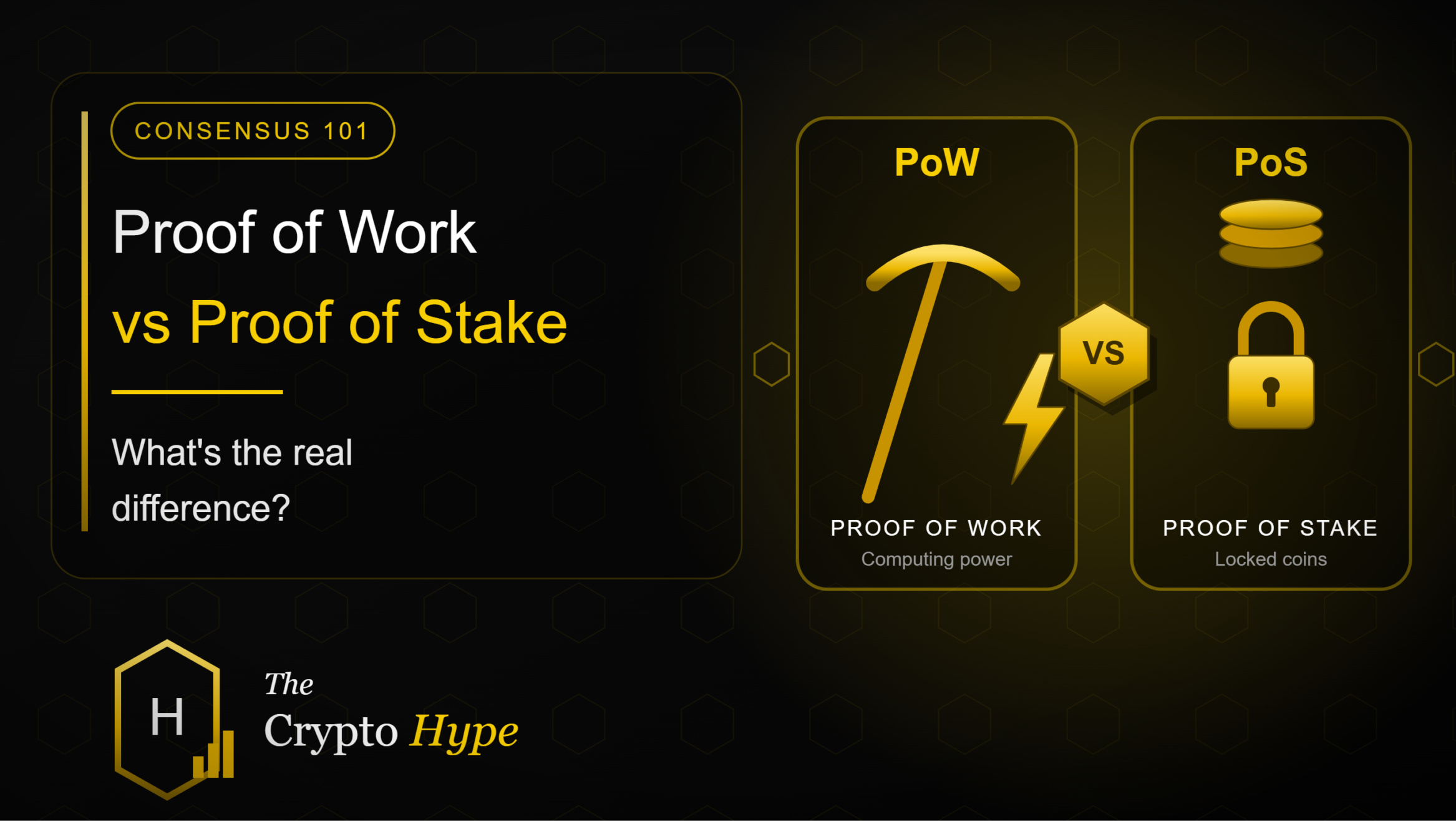
Proof of Work is often compared with Proof of Stake (PoS), another popular consensus mechanism. In PoW, validators compete using computing power to solve puzzles. In PoS, validators are chosen based on the amount of cryptocurrency they stake in the network.
While PoS is generally more energy-efficient, PoW remains highly respected for its security and proven effectiveness.
Why Proof of Work Matters
Proof of Work was a groundbreaking innovation that solved the problem of achieving trust in a decentralized environment. By requiring computational effort to validate transactions, it enables blockchain networks to operate securely without relying on central authorities.Even as newer consensus mechanisms emerge, PoW continues to play a vital role in the cryptocurrency ecosystem and remains the backbone of Bitcoin, the world’s largest cryptocurrency.
Proof of Work is the mechanism that helps blockchain networks achieve consensus, validate transactions, and maintain security. By requiring miners to perform computational work, PoW creates a trustless and decentralized system that protects the integrity of the blockchain. Although it faces challenges related to energy consumption and scalability, its security, reliability, and historical success make it one of the most significant innovations in the world of cryptocurrency.