
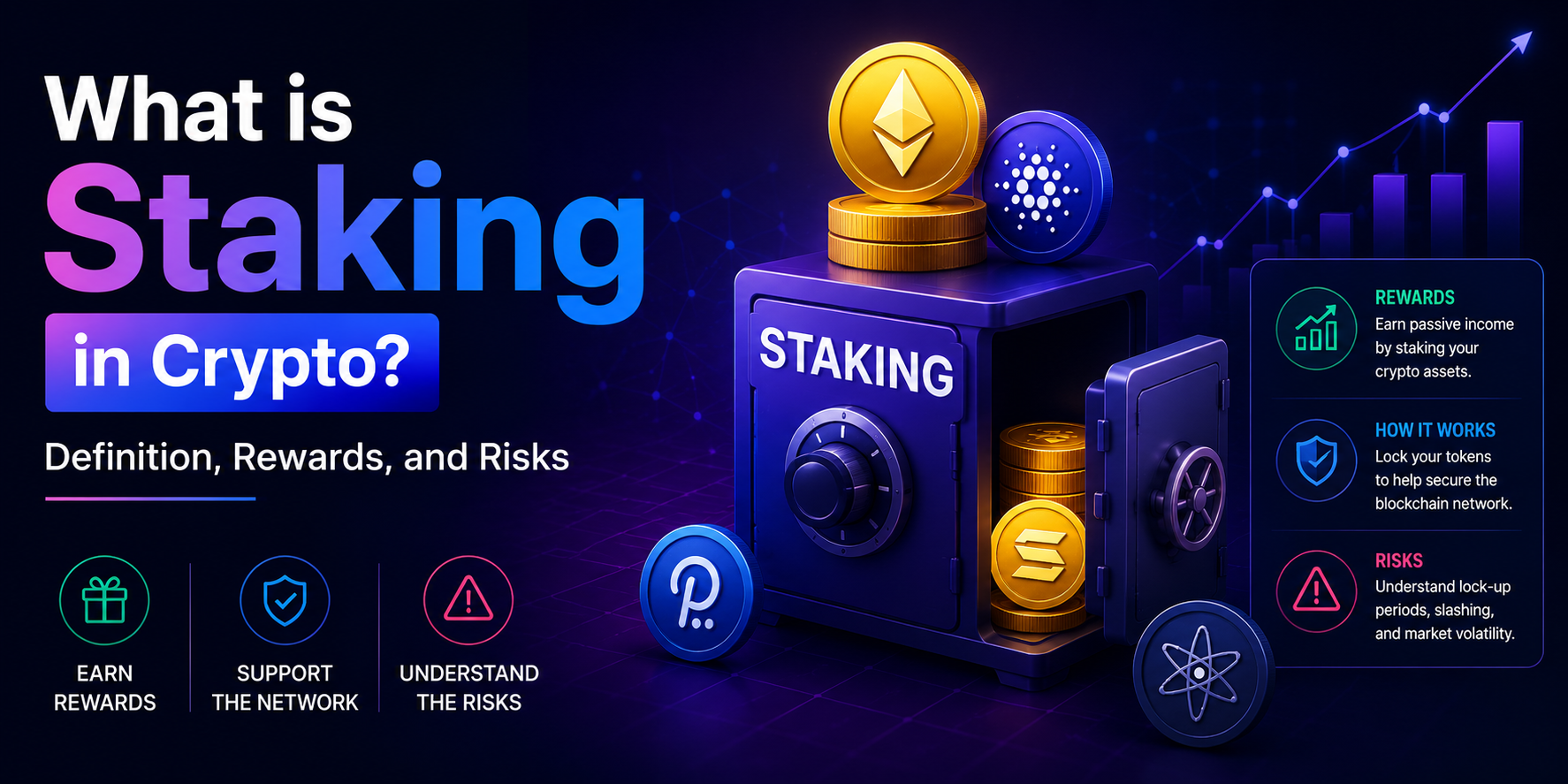
Crypto staking is the process of locking up cryptocurrency in a blockchain network to support its operations, such as validating transactions and maintaining network security. In return for contributing to the network, participants receive rewards, typically paid in the same cryptocurrency they stake.
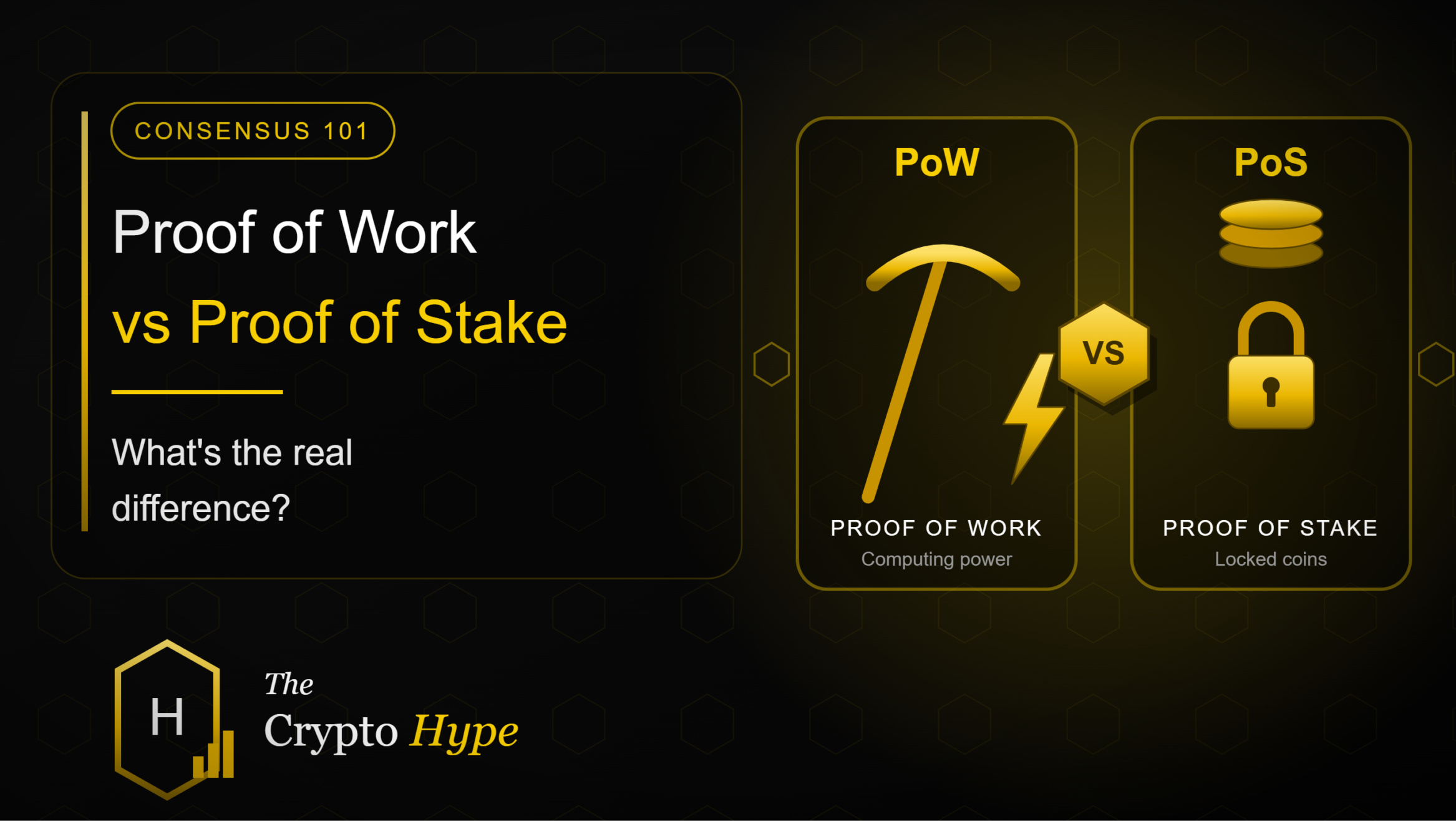
Staking is primarily associated with blockchains that use a Proof-of-Stake (PoS) consensus mechanism. Unlike Proof-of-Work systems, where miners solve complex mathematical problems using powerful computers, Proof-of-Stake relies on users staking their coins to validate transactions and create new blocks.
Popular cryptocurrencies that support staking include Ethereum (ETH), Cardano (ADA), Solana (SOL), etc.
How Does Staking Work?
When users stake their crypto, their assets get locked in a network for a specific duration of time. These stakes are a commitment to the blockchain’s integrity.
Let’s simplify this. Think of it as your savings account. Your bank pays interest on the money deposited in it. Banks are centralized and they already hold the amount you give to them for which they pay you interest. When they lend out your money, they pay you a portion of an interest gained on it.
So, something similar happens when you stake your crypto. The question which arises here is if your crypto is already in the network, why stake?
Because validators exist. Validators verify transactions and add new blocks to the blockchain. Validators are chosen based on the amount of cryptocurrency they have staked. Once transactions are successfully validated, the network distributes rewards among validators and delegators.
To run a validator node, a lot of capital is required. You help by delegating your stake in securing and running the network and therefore get rewarded for securing and strengthening the network. Many investors participate in staking through crypto exchanges or staking pools, allowing them to earn rewards without running their own validator nodes.
Rewards of Crypto Staking
1. Passive Income: One of the biggest advantages of staking is the ability to generate passive income. Instead of leaving crypto assets idle in a wallet, investors can earn regular rewards simply by participating in the network.
2. Network Participation: Staking helps secure and decentralize blockchain networks. By staking their assets, users actively contribute to the health and functionality of the ecosystem.
3. Lower Energy Consumption: Compared to cryptocurrency mining, staking requires significantly less energy. Proof-of-Stake networks are generally considered more environmentally friendly than Proof-of-Work blockchains.
4. Potential Compound Growth: Many staking platforms allow users to reinvest rewards automatically. This compounding effect can help increase overall returns over time, especially during long-term holding periods.
Risks of Crypto Staking
As it happens with any investment, there are rewards and there are also risks. In the case of staking, it is also the same.
1. Price Volatility: The value of the staked cryptocurrency can fluctuate significantly. Even if investors earn staking rewards, a sharp decline in the asset’s market price could outweigh those gains.
2. Lock-Up Periods: Certain staking programs require funds to remain locked for a specified duration. During this period, users may be unable to sell or transfer their assets, limiting liquidity.
3. Validator Risks: When staking through a validator, poor performance or malicious behavior can result in penalties known as “slashing.” In some networks, a portion of the staked assets may be lost if validator requirements are not met.
4. Platform and Security Risks: Users who stake through exchanges or third-party platforms are exposed to additional risks, including platform failures, cyberattacks, or operational issues.
5. Regulatory Uncertainty: As governments and regulators continue to develop frameworks for digital assets, staking services may face changing compliance requirements in different jurisdictions.
Should you do Crypto Staking?
Crypto staking is a good way to earn both passive rewards and supporting blockchain networks. It is great for long-term investors who like to hold their assets for long durations. Staking gives them an opportunity to generate additional returns without doing trading actively.
Even though Staking has its benefits, it should not be viewed as a risk-free income. It is important for investors to always check and evaluate important factors such as market volatility, lock-up periods, validator reliability and platform security.
Investment is always strategic and should always involve evaluating both the rewards and risks. It is only possible for investors to make informed decisions and choose reputable staking platforms when they actually conduct proper research.
So, to answer the question whether you should do crypto staking? Probably yes if or when you have done proper research and have invested time to study and analyze both the risk and rewards.