
The digital world is constantly evolving, introducing new ways for people to create, own, and exchange value online. One of the most talked-about innovations in recent years is the NFT, or Non-Fungible Token. From digital art and music to gaming assets and virtual real estate, NFTs have transformed how digital ownership works.
But what exactly is an NFT, and why has it gained so much attention?
A Deep Dive into NFTs
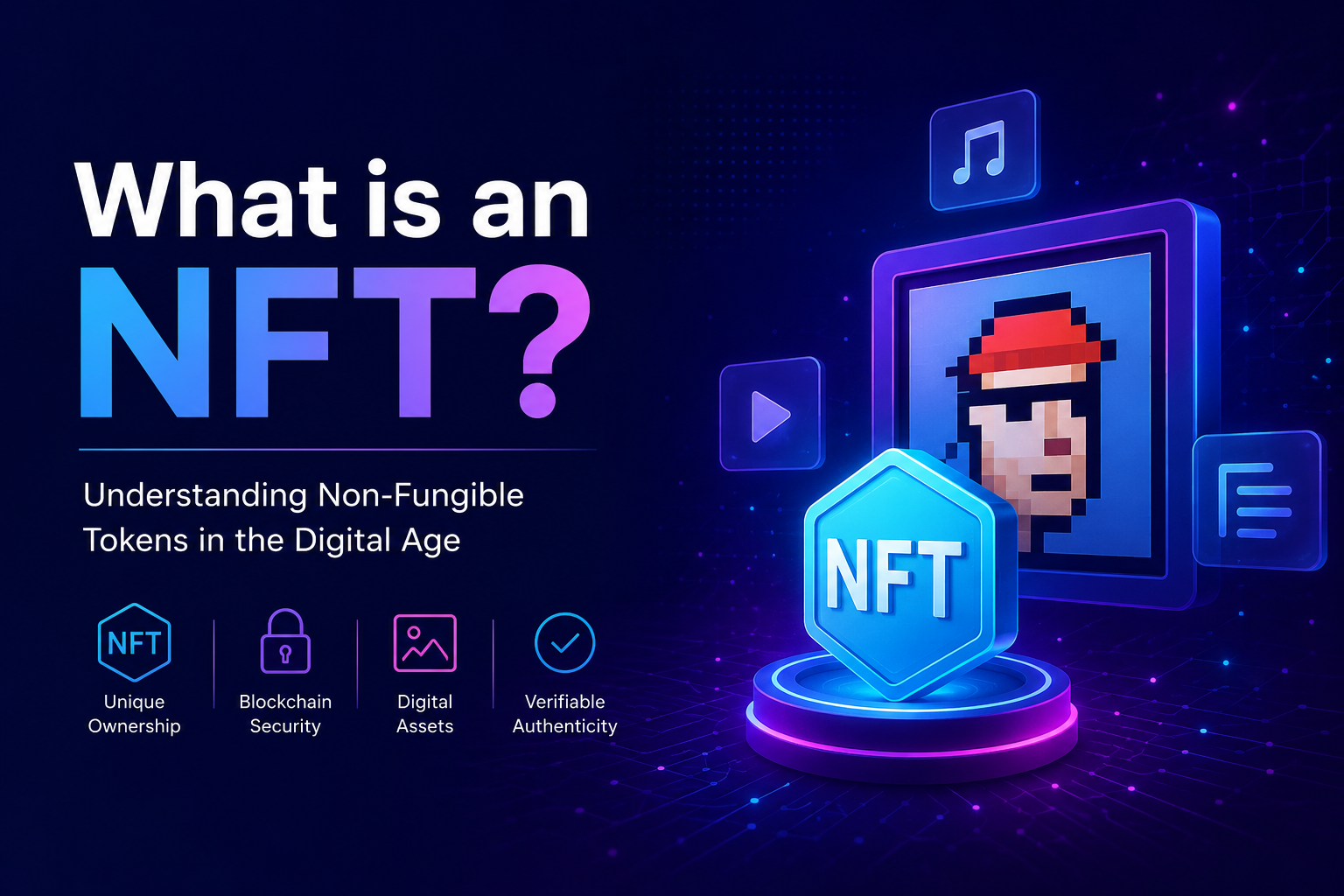
NFT stands for Non-Fungible Token. Non-Fungible means something unique that cannot be replaced by another identical item. Token refers to a digital asset recorded on a blockchain.
For example, a ₹500 note is fungible because it can be exchanged for another ₹500 note with the same value. However, an original painting by an artist is non-fungible because it is unique and cannot be replaced by an identical item.
An NFT acts as a digital certificate of ownership for a specific asset. This ownership is recorded on a blockchain, making it transparent, secure, and verifiable.
How Do NFTs Work?
NFTs are created and stored on blockchain networks, most commonly Ethereum. When an NFT is minted, information about the asset and its ownership is permanently recorded on the blockchain.
The NFT itself does not always contain the digital file. Instead, it contains metadata and proof of ownership linked to that file. The reason is simply that blockchain technology is decentralized and tamper-resistant and anyone can verify who owns a particular NFT and trace its transaction history.
Almost any digital asset can be converted into an NFT, including digital artwork, music and audio files, videos, animations, collectibles, gaming items, virtual land and real estate, membership passes, event tickets, and even domain names. This flexibility has opened up new opportunities for creators, brands, and businesses to monetize digital content.
Why Are NFTs Valuable?
The value of an NFT comes from its uniqueness, scarcity, and ownership rights.
Just like physical collectibles such as rare trading cards or limited-edition sneakers, NFTs can become valuable because they are limited in supply or hold cultural significance.
For creators, NFTs provide a direct way to sell digital work without relying entirely on intermediaries. Some NFT platforms even allow creators to earn royalties whenever their NFT is resold in the future.
For buyers, NFTs offer proof of authenticity and ownership that can be independently verified on the blockchain.
NFTs Beyond Digital Art
While NFTs initially gained popularity through digital art collections, their potential extends far beyond artwork.
Businesses are exploring NFTs for multiple reasons, including but not limited to loyalty and reward programs, event ticketing, identity verification, intellectual property management, gaming economies, or metaverse experiences.
NFTs can also be used to represent ownership of physical assets by linking real-world items to blockchain-based records.
As blockchain technology matures, NFT applications are expected to expand into industries such as healthcare, education, entertainment, and real estate.
Challenges and Considerations
Despite their growing adoption, NFTs come with challenges. Market prices can be highly volatile, and not every NFT will retain or increase its value. Buyers should conduct thorough research before making purchases.
Additionally, concerns around copyright, intellectual property rights, and environmental impact have sparked discussions within the industry. However, newer blockchain networks are increasingly adopting energy-efficient mechanisms to address sustainability concerns. It is essential to understand the technology, platform credibility and utility of an NFT before investing.
What is the future scope of NFTs?
NFTs introduce a new model for ownership, authenticity, and value exchange in the digital economy. As blockchain adoption continues to grow, NFTs are expected to play a significant role in how people interact with digital assets, communities, and online experiences.
Whether you’re an artist, investor, business owner, or technology enthusiast, understanding NFTs is an important step toward navigating the future of Web3 and decentralized innovation.